ESG disclosure · South Africa
Your ESG report should survive scrutiny, not just publication.
We prepare right-sized sustainability disclosure for South African businesses, built against GRI, IFRS S1 & S2, the JSE Sustainability Disclosure Guidance and the GHG Protocol, so a funder, tender panel or corporate customer gets one answer that holds.
Reporting cycle
2026
Delivery
Nationwide
Scoping call
30 minutes
Speak to the desk+27 73 262 0355 · or ask the ESG desk assistant in the corner of this page.
Frameworks we report against
The mandate
ESG has become a commercial requirement, not a communications exercise.
South Africa has no single ESG statute. Obligations stack instead — environmental law, tax law, exchange guidance, governance codes and the procurement rules of whoever is buying from you. Most SMMEs meet them for the first time through someone else’s questionnaire.
We help you meet that moment without hiring a sustainability department: a defined scope, documented data, and a pack you can hand over.
Your funder asks first
Banks and development financiers now build ESG questions into credit assessment. A thin answer slows an approval you have already earned.
Tenders score it
Preferential procurement and private sector tenders increasingly carry environmental and social scoring. Evidence turns a score into points.
Customers require it
Corporate and listed customers push supplier questionnaires down their value chain. Answer once, properly, and reuse it every cycle.
Regulation is tightening
The Climate Change Act, carbon tax phase two and JSE disclosure guidance are changing what “compliant” means, even below listed-company scale.
Capabilities
Six disciplines, one reporting programme.
Materiality & gap assessment
A focused assessment of which environmental, social and governance topics actually matter to your business and your stakeholders — and where your evidence is missing.
Materiality register · gap analysis · reporting calendar
02Carbon footprint & energy baseline
Scope 1 and 2 inventories, with Scope 3 screening where your customers require it, using South African grid and fuel factors and a documented calculation trail.
Emissions inventory · methodology note · reduction priorities
03First sustainability report
A right-sized report for your financial year: material topics, core metrics, governance narrative and a clear basis of preparation, drafted for lenders and customers rather than awards.
Report-ready document · metric tables · evidence register
04Funder, tender & supplier packs
Structured answers to the ESG questions that arrive from banks, DFIs, procurement panels and corporate customers — built on data you can reuse next cycle.
Questionnaire responses · policy set · summary one-pager
05Social, labour & B-BBEE alignment
Workforce, health and safety, skills and enterprise development data aligned to the B-BBEE scorecard, so one set of numbers serves both the codes and your ESG narrative.
Social metrics pack · alignment mapping
06Assurance readiness & training
Pre-assurance reviews, internal controls and board-level briefings, so the first conversation with an assurance provider is about scope — not missing support.
Readiness review · controls schedule · team briefing
Built for SMMEs
The same standard of evidence, sized to your business.
Fixed-fee engagements, scoped in a single call. No retainer required, no reporting team to build, and no template that was written for a listed group.
ESG starter pack
Answering your first questionnaire
- Materiality shortlist and boundary
- Core metrics: energy, water, waste, workforce, safety
- Scope 1 & 2 carbon baseline
- Policy set: environmental, social, ethics
- Completed customer or funder questionnaire
First sustainability report
A defensible first annual disclosure
- Everything in the starter pack
- GRI-referenced report structure
- Scope 3 screening where material
- Governance and King IV-aligned narrative
- Evidence register behind every metric
- Board or owner sign-off pack
Funder & tender pack
A bank, DFI or procurement deadline
- Credit or tender ESG response
- Climate risk and opportunity note
- Labour, safety and transformation data
- Management summary for the credit committee
Fees are quoted in rand after scoping · VAT excl. · Delivery nationwide
How we work
A reporting cycle you can plan around.
Four stages, each with defined deliverables and a sign-off point, scheduled against your year rather than ours. Most SMME engagements finish inside one quarter.
Frameworks covered
GRI · IFRS S1 & S2 · JSE guidance · King IV · GHG Protocol · B-BBEE · SDGs
Scoping & diagnostics
We confirm which frameworks actually apply, run a gap analysis against the evidence you already hold, and set a reporting calendar against your financial year.
Scope memo · data request list · fee
Evidence & data build
Metric definitions, source owners and an evidence register are agreed before a word of narrative is written. If a figure cannot be traced, it does not go in.
Evidence register · calculation workbook
Drafting & review
Narrative, tables and a management summary, with two structured review rounds built into the schedule rather than an open-ended comment cycle.
Draft report · metric tables
Sign-off & handover
Owner or board sign-off, a reader-ready summary for funders and customers, and a file you own and can reuse next cycle.
Final report · sign-off pack
Sector intelligence
Every sector is measured differently.
Materiality is not transferable. A fleet, a packhouse and a construction site carry different exposures — and the questions they receive reflect that. We report within the language of your industry.
Not listed? The frameworks still apply — we simply assess your material topics from the start.
- 01
Manufacturing & industrial
Process energy, waste, water, labour
- 02
Agriculture & agro-processing
Water stewardship, seasonal labour, packaging
- 03
Logistics & transport
Fleet emissions, driver safety, fuel
- 04
Construction & property
Embodied carbon, site safety, local procurement
- 05
Tourism & hospitality
Energy intensity, water, community employment
- 06
Professional & financial services
Governance, data ethics, procurement
- 07
Retail & FMCG suppliers
Packaging, Scope 3, supplier codes
- 08
Mining & mining services
Closure, community agreements, supplier standards


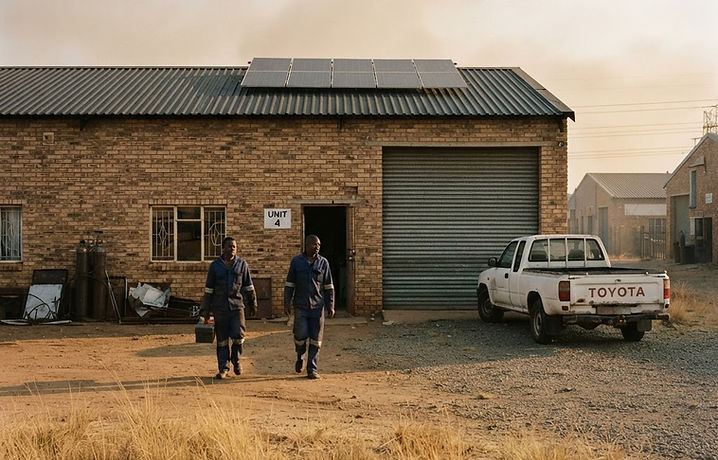
Gauteng manufacturer · first reporting cycle
Why ESG Reports South Africa
Credibility is a method, not a tone of voice.
Evidence before narrative
We start with the data trail, then write. Every figure in the document traces back to a source in the evidence register.
South African factors, not imported defaults
Local grid emission factors, B-BBEE definitions, King IV governance language and the disclosure regimes your stakeholders actually read.
Sized for an SMME budget
A defined scope and a fixed fee. No retainer, no reporting team to build, no report longer than it needs to be.
Independent by design
We prepare you for assurance but never present our own work as assurance. The distinction matters to your lender.
Insights
Working notes on disclosure.


What South African banks now ask SMMEs about ESG — and how to answer
Credit committees have quietly added a sustainability section to the file. Most of it can be answered from documents an established business already holds.

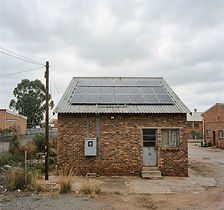
Scope 1 and 2 for a small business: a practical starting point
Most first carbon baselines stall on data collection, not methodology. A simple boundary and one year of accounts will take you further than a perfect model you never finish.

The Climate Change Act: what it means below listed-company scale
The Act’s obligations land hardest on large emitters, but its ripples reach SMMEs through procurement, permits and the questions their customers must now answer.
Next reporting year
Start with a scoping conversation, not a quotation.
Tell us who is asking and what they want to see. We will confirm which frameworks apply, what evidence you already hold, and what a defensible pack would take.